
After the End of Work
After COVID-19 hit in 2020, computer science quickly became one of the most popular majors.
Developers were in short supply, and companies offered high salaries. Even among engineering programs, computer science admission cutoffs were the first to shoot up. People firmly believed that learning to code would land you a good job.
Within just a few years, the mood changed.
AI writes code and finds bugs. One developer using AI handles work that used to take several people. Companies no longer hire as many junior developers as they once did.
MIT professor Sangbae Kim, who recently appeared on the Korean talk show You Quiz on the Block, put it this way:
“Graduating in computer science used to mean you had nothing to worry about. In just a year and a half, graduates can no longer find jobs.”
A major that until recently stood for high pay and a secure job is among the first to feel the impact of AI.
Video: You Quiz on the Block, Episode 360 ― Prof. Sangbae Kim, MIT (Korean)
Technology is changing faster than it takes a student to get through college.
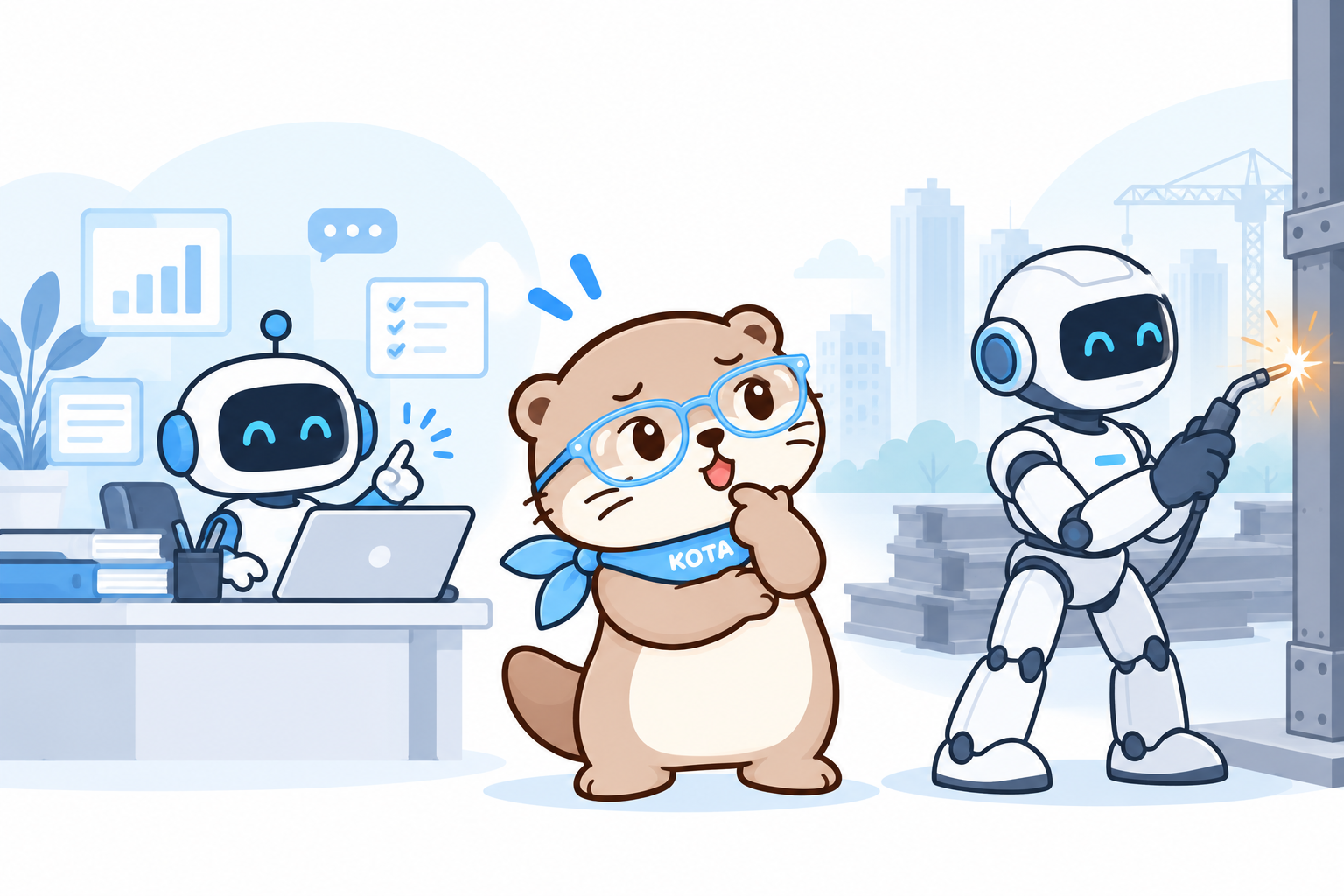
The jobs remain, but fewer people do them
AI will not wipe out every office job tomorrow.
But if one person with an AI agent can do the work that used to take three, a company has less reason to keep employing all three.
Large companies cut new hiring and merge teams. They may move existing staff to less important departments or offer voluntary retirement.
Small businesses may change even faster. Accounting, marketing, research, customer service and document writing, work once split among several people, can now be handled by a few key people and AI.
The International Labour Organization (ILO) estimates that one in four workers worldwide is in an occupation with some degree of exposure to generative AI. Clerical jobs had the highest exposure. Still, the ILO saw it as more likely that the tasks people do will change than that whole occupations will disappear right away.
That does not mean today’s headcount will stay the same.
The job title may survive while the number of people doing that job shrinks.
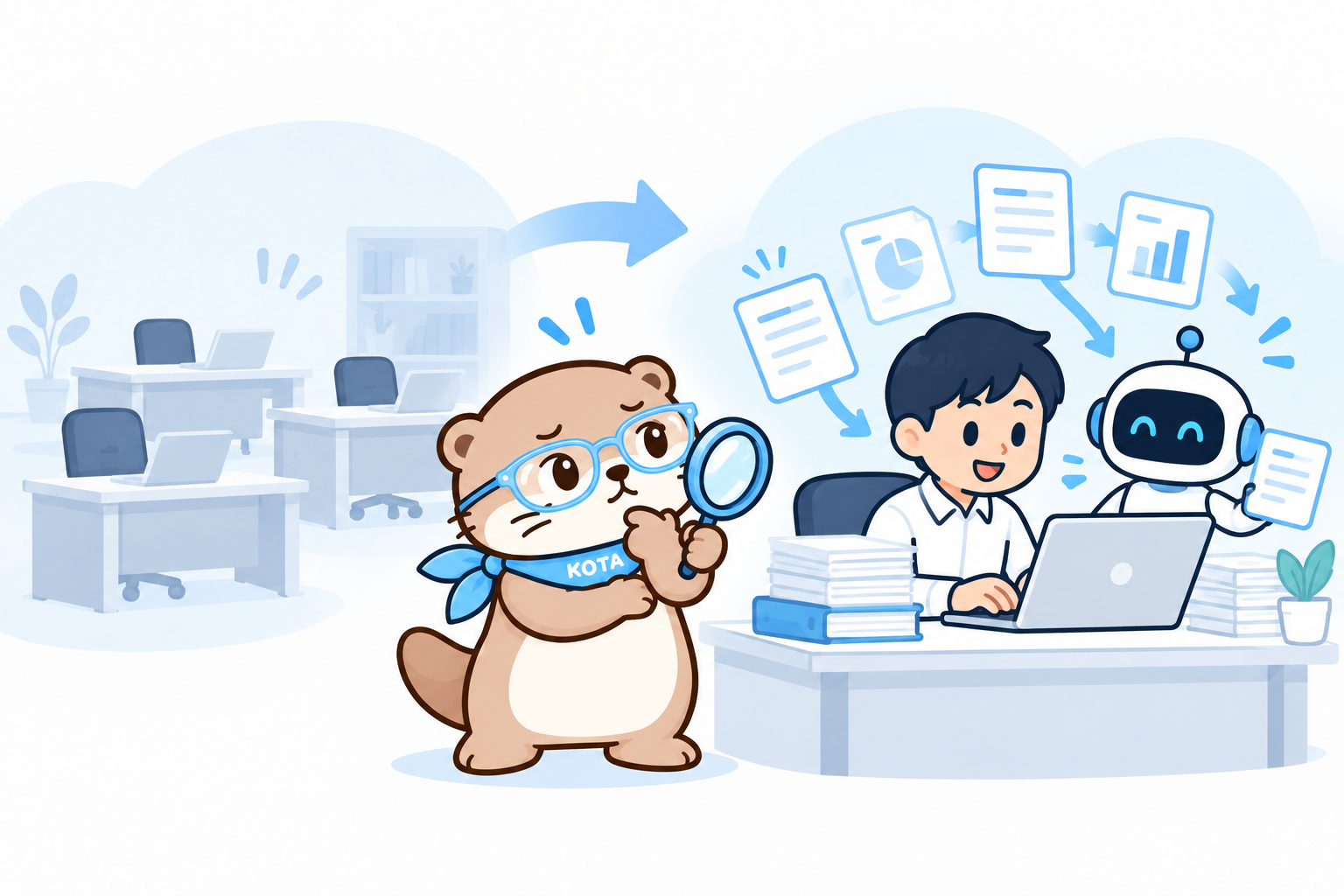
Is it safe to leave the office for the trades?
More and more people are quitting office jobs to learn hands-on trades like welding or wallpapering.
For now, that may be a sensible choice. Construction sites are not as orderly as factories. You have to move through tight spaces, figure out a different structure every time and deal with the unexpected. That is hard for today’s robots.
But it may not be a permanent safe zone.
Industrial welding is already largely automated. As humanoids reach the market and their mobility and hand precision improve, the places where robots work will expand beyond the factory.
Robots do not tire of lifting heavy equipment. They can work in spaces full of dust and toxic fumes. A skill one robot learns can be copied to others.
If AI takes over office work, robots with AI inside will take over physical labor.
Physical work may not be work that escapes automation, only work that automation reaches later.
Investment analysis is office work too
Much of investing is analytical labor.
You read financial statements. You sort through news and filings. You compare industry growth rates. You look for chart patterns and screen stocks. When a new strategy comes to mind, you backtest it on historical data.
AI is good at all of this.
AI can analyze thousands of companies at once. When a new filing comes out, it can check right away whether the investment thesis has changed. It can find recurring patterns in historical data, turn them into strategies and even place the orders itself.
Once everyone uses similar AI, a simple information edge disappears quickly. Strong earnings, fresh news and recurring chart patterns are all spotted by countless AIs at the same time.
Trading skills built on analyzing past data and finding patterns in particular are likely to be done better by computers than by people.
So will trading keep working?
I don’t know the answer yet.
As long as human fear and greed and institutional money flows remain, trends and overreactions may keep appearing. But the skill of spotting patterns first and placing orders quickly is likely to become more and more commoditized.
Your own perspective may matter more
In the age of AI, some forms of long-term value investing may hold up relatively longer.
Not the approach of simply looking for companies with low P/E ratios. Comparing numbers and calculating fair value is also something AI does faster.
What remains is perspective.
You have to judge which industries will grow, what change the market is missing right now and whether management is allocating capital well.
And you have to be able to wait while the market moves against your view.
AI can lay out many possible futures. But which future to believe more, how long to wait and at what point to admit you were wrong differ from one investor to another.
The more information is leveled out, the more your own perspective and time horizon make the difference.
A job wasn’t enough to buy a home. What if the job goes too?
Among Koreans in their 20s and 30s, there is deep frustration that whether you work at a big company or in a professional field, decades of hard work still won’t buy you an apartment in Seoul.
The prices of major assets like homes and stocks rose faster than anyone could save from a paycheck. A sense of deprivation built up: however hard you work, it is hard to catch up with people who already owned assets.
From here on, even keeping that job may no longer be a given.
Labor income already struggles to keep up with asset prices, and AI may also cut the number of stable jobs. People who own assets share in the productivity AI creates as shareholders. People without assets find it harder even to build the capital to start investing.
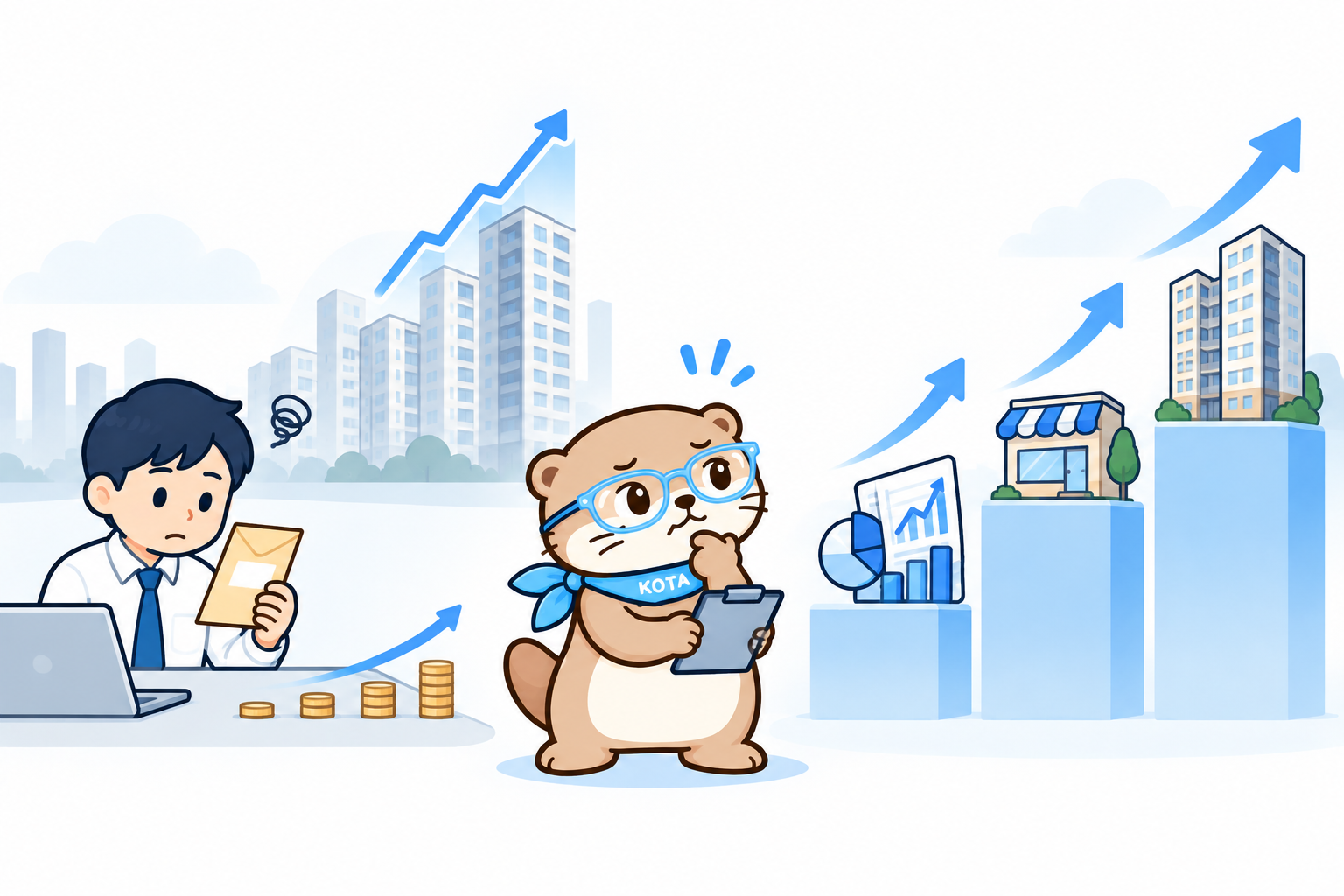
The gap keeps widening.
- People who own assets share in corporate profits and rising asset values.
- People who depend on labor income face fewer hires and weaker bargaining power over wages.
- People without assets have fewer chances to start saving and investing.
In the age of AI, the gap may widen less through differences in salary than through differences in ownership.
What remains after the end of work?
Until now, the most important question for an individual has been this:
What work will I do to earn money?
Once AI takes on office work and robots start taking on physical labor too, the question may change.
What do I own?
Where is my capital allocated?
Even if AI and robots greatly raise productivity, the gains will not be shared equally.
The founders and shareholders of AI companies, the companies that own robots and data centers, and the people who hold brands and platforms share in rising productivity through ownership. People who sell only their own labor face automation and wage competition head-on.
Capital income here doesn’t just mean dividends and rent.
It includes any asset that can build value even while you are not working: equity in companies, businesses, brands, copyrights, software.
Of course, not everyone has enough money to invest. Investing alone cannot solve the problem of labor either. How to share the wealth AI creates is also a question of institutions and policy.
Even so, for individuals, capital income is likely to become more than a way to get rich. It may become a way to make up for increasingly unstable labor income.
As the era when you could live on labor alone comes to an end, owning even a small share of productive assets comes closer to a matter of survival.
In the end, what remains is capital allocation
Even if AI finds good investment opportunities for you, decisions remain.
- How much of your total assets to invest
- How much to allocate to trading and how much to long-term investing
- How large a loss you are willing to accept
- Whether to stop a strategy when it underperforms
- How to combine cash with several strategies
AI can calculate the optimal weights. But people have to decide what to optimize for.
The answer changes depending on whether the highest return matters most, whether reducing maximum drawdown matters most or whether you need steady cash flow.
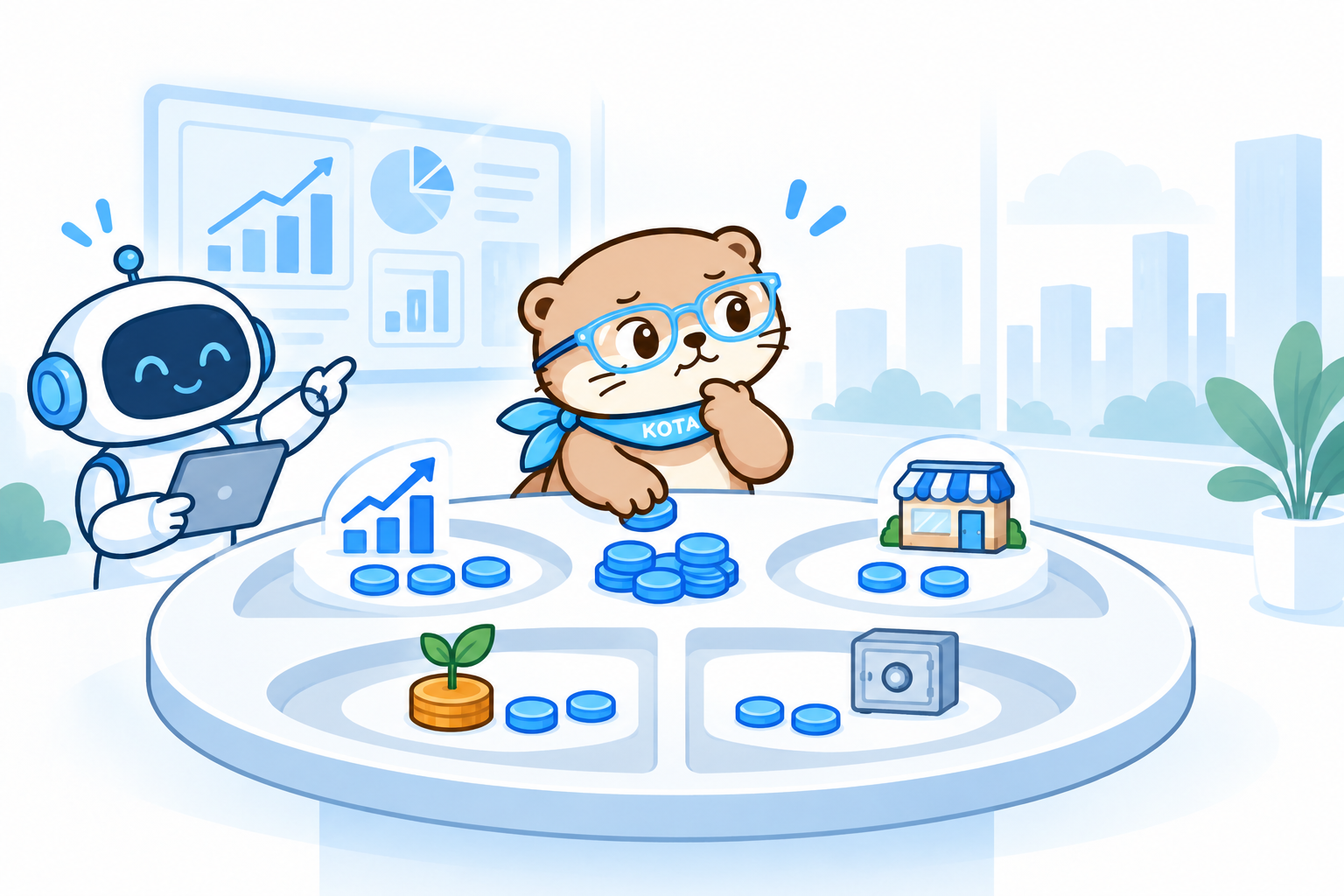
I trade too, but I don’t think trading skill alone is a lasting edge.
Patterns I find in historical data, AI can find faster. So I find myself thinking less about the strategy itself and more about the structure above it.
I have to decide how much to allocate to trading, by what standard to hold companies I believe in for the long term and how much cash to keep. The whole portfolio has to be designed so it doesn’t collapse even when one strategy stops working.
What investors need going forward may not be the ability to do every analysis themselves.
The ability to verify AI’s analysis, to form a perspective of your own and to decide how much capital to put behind that perspective will matter more.
Whether labor will disappear completely is still unknown.
But the shift is already under way: labor is becoming less scarce, and ownership is becoming more important.
Even after the end of work, capital remains.
And what determines where an individual stands will be less their job than what they own and where they allocate that capital.
Be the first to comment.